Braga
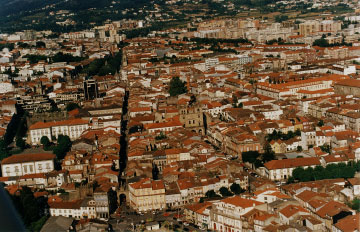
Braga
Braga's View
In Braga, there are about 155.000 inhabitants. This city is situated in a medium altitude of 215 metres. The Romanization process started in 200 B.C.. It was consolidated since the beginnings of our Age, with the foundation of the first Braga city- Bracara Augusta. Since the 5th century, the Barbarian invasions ( people: Suevos and Visigoths ), brought to this region deep perturbations that were prolonged with the Arabian people until the end of 8th century, and the reorganization has started only in the end of the next century.
In the 18th century, Braga reappears and shines in the flowered Baroque’s curves, made by the Archbishop of the Bragança House and by the artistic genius of André Soares (Architect 1720- 1769), that conferred it for all eternity, an exceptional monument, a real Ex-Libris of Baroque style in Portugal. In the end of the century, we have witnessed with Carlos Amarante (Engineer and Architect 1742-1815), the transition to the Neoclassic style.
The pos-revolution period revealed an enormous growth in all levels (demographic, economical, cultural and urban) and Braga was converted, very probably in third city of this country. On the level of these architectonic interventions, we have to refer still, the Municipal Market of “Carandá” and the Sports and Exhibitions Palace, important buildings in the Portuguese architectonic context. O the other hand, we witness a permanent action to defend the wonderful architectonic heritage.
The monuments
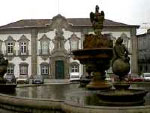
Braga's Town Hall
It’s an André Soares work, started in 1754 (only finished in1865). The equilibrium of the proportions, the fineness of the lines and the fascinating composition of the main façade are remarkable.

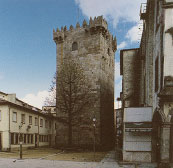
The Donjon
It’s the last remain of the Braga Castle, built by D.Dinis, which was the idea until the beginning of the 20th century. Around 1900, the castle was destructed to build the Arches and give a new meaning to the economical center of the city.
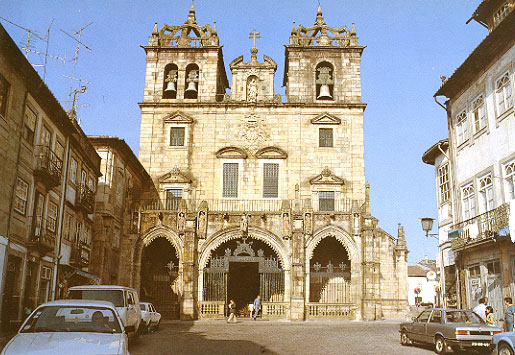
Braga's Cathedral
Braga’s Cathedral was built in the 12th century by lady Teresa and D.Henrique.
Entering the Cathedral through the side door that gives access to the cloisters, we find just on the right side, an ogival door where we enter the São Geraldo Chapel. This door, in spite of its style, it’s not gothical, but from the 18th century, when D. Rodrigo ordered the destruction of a possible romanic chapel, to build in its place another one where the mortal remains of the first archbishop of Braga, São Geraldo should rest.
Inside, we have a fantastic altarpiece, in gold baroque.
The Arches
In the place where we find the Arches today, passed one of the stretches of the medieval wall. In 1715, the Arches were built leaning to the old wall. Opposite, was the Field of Saint Ana, projected in the 16th century by D. Diogo de Sousa, now called Republic Square. Between 1761 and 1767, the central nucleus of the Arches was inaugurated to build the Lapa Church, in the time of the archbishop D. Caspar de Bragança. André Soares elaborated the design of the church Arcada
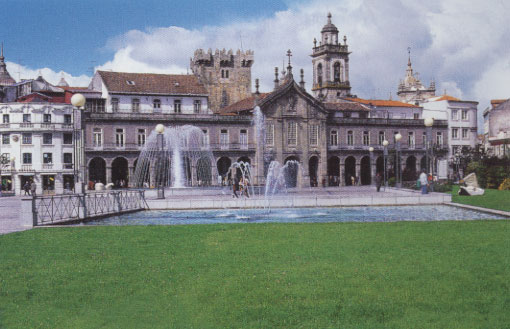
It’s a development point of many commercial and administrative activities, where we can feel the life of Braga, which walks by there.
At the beginning of the century, the building was a luxurious hotel with… electricity and hot baths.
Falperra
On the Mountain range of the Falperra, was raised a hermitage dedicated to the Saint Maria Madalena. Workmanship of Baroque style, projected by André Soares, its construction is of the 18th century and is owed to the Archbishop D. Rodrigo de Moura Teles. With amazing exterior decoration, it is encircled by the famous freshness and the flaring atractivity of the Falperra area. We also call the attention to the Chapel of Saint Marta de Leão.
Thinking about a better exploitation of its varied potentialities, a magnificent hotel was constructed in the place, which provides innumerable comforts.
The Monastery of Tibães
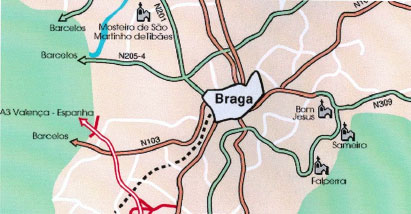 Mosteiro de Tibães
The Monastery of S. Martinho of Tibães is located in the North of Portugal, 6 kilometres northwest of Braga.
It was founded by monks at the end of the 10th century.
It has been formed in the richest and most powerful monasteries in the North of Portugal, it also became the Mother House of all the Benedictine monasteries and diffusing centre of cultures and aesthetics.The Monastery of Tibães also serve as “building yard-school” to form types of work of Civil construction.
The Monastery of Tibães, since the seventies witnessed the dilapidation of its estate (ruin and abandon). In 1986 the Portuguese State started a project of recuperation.
The door and Tower S. Tiago
It’s the access door to the limit of the square of the older Jesuit School of General studies. It was extinguished by the Marquis of Pombal. It is watched by the imponent bell tower of the chapel that exists there.
Sameiro and Bom Jesus
Sameiro, shrine on the top of the “Espinho” hill, in an altitude of 570 metres. Its founder was the priest Martinho da Silva ( 1812-1875 ), illustrious preacher.
The “Senhora do Sameiro”’s image present in the shrine is a work made by the Italian Eugénio Maccagnani, and was blessed by the pope Pio IX, in 1876. The altarpiece is in white polished granite and the tabernacle is in silver.
It is a pleasant place for its spirituality and for the view it comprises, from the Gêres and the Cabreira to the Atlantic.
 Sameiro
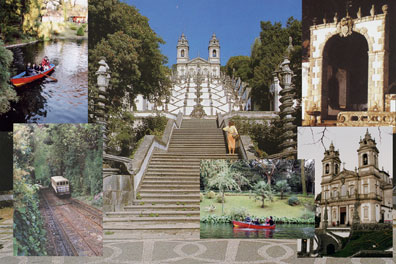 Bom Jesus
Roman hot baths of the "Alto da Cividade"
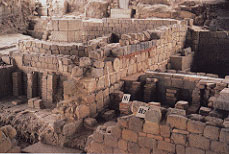
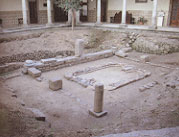
Among many important ruins that exist in Braga, we mention the hot baths of the “Alto da Cividade”. They are very important ruins of an enormous public building with bathhouses, from the 1st century, that still presents many functional parts of this roman public hot baths. It has been subject to various renovations and preserved its functions until the 5th century.
Andicraft and Folklore
Andicraft
Braga is also known for the grandeur of its handicraft.
There are various examples, but we could begin by the typical regional china, attractive by the variety of its forms and colours.
Another handicraft element we must not forget are the wood miniatures, which colour the most varied working objects. We go on to the handmade “farricocos” or the “croças”. Ex-libris of the local handicraft are the small guitars and violas called “cavaquinhos”, who resist time and preserve themselves manual and actual.

Folklore in Braga
The tradition of the folklore in our town is very ancient. We created the actual “rusgas” when, in the past, it was usual to see bands of players, going to pilgrimages, huskings and other collective works. “Rusgueiros” usually joined them, along with defiance singers and even voices of girls. To that group we gave the name “rusgas”. Then, José Teixeira Machado, felt it was necessary to keep alive the happiness of these pilgrimages and decided to form, on the 24th June 1965 the Saint Vicent’s “rusga”.
Among many of these festivities, we call the attention to the beauty of its clothes and also to the genuine and authentic spirit of the “rusga”.
Gastronomy
Minho’s cookery is a festival of three flavours and subtle perfumes, product of ancient experiences of anonymous hands, the wise valorisation of the fruits of the land, the collective imagination. Minho is specialized in cod.
The splinters, of yellow cure, today have practically disappeared, Margarida’s cod, square’s cod, Miquelina’s, Mira Penha’s and in Braga Narcisa’s cod, of course, which should the better known as ‘à Eusébia’, the emeriti cook of the restaurant situated next to the cemetery and who died in 1972.

The Sports
Some interesting aspects of the city
The Central Avenue
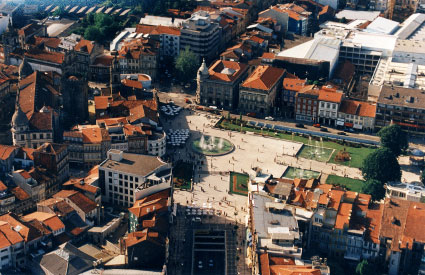
The Central Avenue , as the name indicates, is in the center of the city of Braga.
This place is extremely pleasant because it has various gardens and some fountains. This avenue is, in general, the stage of the commemorations of the victories of the various clubs of football, shows and concentrations of the Minho handicrafts.This is too a point of date of the many teenagers, that spend the free times with activities as: riding rollerblades, skating, in the playground, going to the Bragashopping, going to the Macdonald’s, etc.
Braga Shopping
It is the second greatest shopping mall in Braga, which is located in the Central Avenue. And it is one of the locals that have more interest for teenagers.
It is a quite accessible shopping mall, because it is in the city centre. And it has many clothes shops for teenagers.

Braga Parque
It is the biggest shopping mall in Braga. The teenagers visit the “Braga Parque” more, because it has many shops. It has a gymnasium, sports shops, animal shops, cinema with better conditions, clothes shops, cafés, etc.

The Exhibitions Park
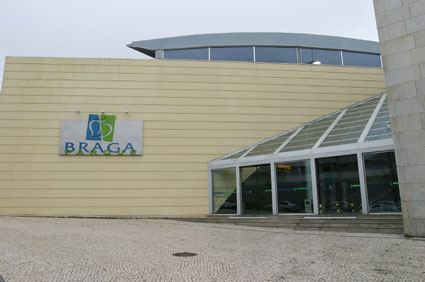
The Exhibitions Park of Braga (P.E.B.) is the only structure in the area which is specially fitted to host fairs, exhibitions, conferences and other events of a socio-cultural, scientific, recreational and sport type, on a national and international scale. It is provided with a Conference Hall, which includes the Main Auditorium. Today, Braga has a number of good reasons to believe that it will play a major role in the development of business tourism, the Exhibition Centre being an important tool hereby.
Good accesses by road, a fine Hotel accommodation, a wide range of logistical, supporting and leisure facilities, as well as a quite interesting supplementary range of different tourist services, ensure the Exhibitions Park of Braga a privileged position in the dialogue with Spain (Galicia).
The pools
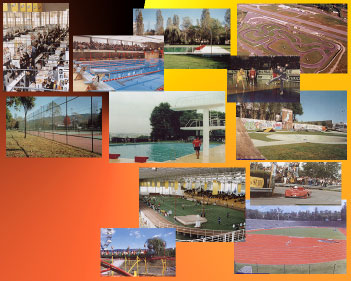
The city of the Braga has various complexes of pools.
They are, for example: the pools of the “Rodovia”, “S.João da ponte”, “Parretas”, “Dume”, “Maximinos”, etc
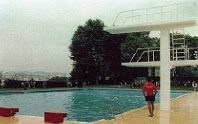
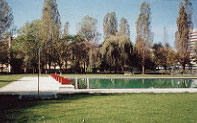
These pools are very popular in the summer, among teenagers.
The better-known pools are those of the “Rodovia”, because they have gardens, football fields and pools.
Bracalândia
Bracalândia is the best amusement park in Portugal, with about twelve attractions.

The Municipal Stadium of Braga
The Municipal Stadium of Braga, described as a “work of art”, is an excellente work of engineering and was designed by the architect Souto Moura. This beautiful stadium is situated in the slope of Mont Castro and has capacity for 30.359 people in the two big stands along the lawn. This stadium contains a big underground parking (for a maximum of 5.000 vehicles).

The Radical Park
This space serves for the people to practise several extreme sports. There is also a Bar where people can talk about the most varied topics.